
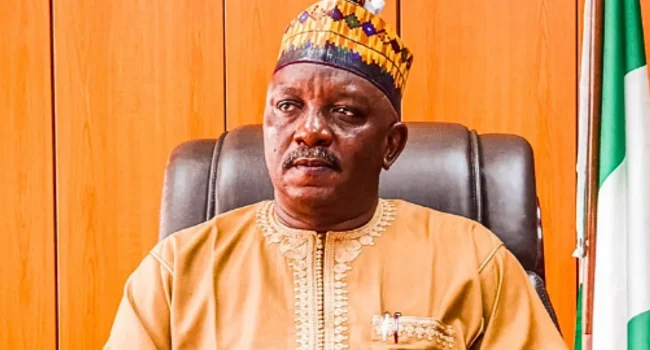
On 13 May 2026, the very day this biography is being written, a Federal High Court in Abuja delivered one of the most consequential anti-corruption verdicts in Nigeria’s post-democracy history.
Saleh Mamman, the former Minister of Power who served in President Muhammadu Buhari’s cabinet from August 2019 to September 2021, was sentenced to 75 years imprisonment in absentia, having been found guilty on all 12 counts of fraud, money laundering, conspiracy, and criminal breach of trust in connection with the diversion of approximately ₦33.8 billion of public funds meant for two of Nigeria’s most critical electricity infrastructure projects: the Mambilla and Zungeru Hydroelectric Power Projects.
The presiding judge, Justice James Omotosho of the Federal High Court, Abuja, did not mince words in his verdict. “Rather than creating a legacy to tackle the epileptic power supply in the country, the defendant was living large at the expense of ordinary citizens,” he stated. “Little wonder Nigerians have remained in darkness till today.”
With those words, a legal case that began with Mamman’s initial arrest in May 2021 came to its most devastating conclusion a conclusion that occurred with the defendant nowhere to be found, having absented himself from the proceedings in what the judge described as a deliberate attempt to frustrate the wheel of justice.
The story of Mamman Kwagyang Saleh for that is his full name, with the family name placed first in the northern Nigerian naming tradition is, in one sense, the story of a man who climbed from a teaching post in a technical school in Mubi, Adamawa State, to one of the highest offices in the Federal Republic of Nigeria.
But it is also, in a deeper and more nationally painful sense, the story of how that trust was betrayed and how the funds that millions of Nigerians had hoped would finally end their decades of darkness were allegedly diverted into private bank accounts, Bureau de Change transactions, foreign currencies, luxury properties, and opaque shell companies.
| Mamman Kwagyang Saleh | |
|---|---|
|
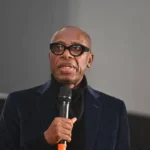
Mamman Kwagyang Saleh: History · Bio · Photo
|
|
| Wiki Facts & About Data | |
| Full Name: | Mamman Kwagyang Saleh |
| Born: | 2 January 1958 |
| Age: | 68 years old |
| Birthplace: | Taraba State, Nigeria |
| State of Origin: | Taraba State, Nigeria |
| Nationality: | Nigerian |
| Occupation: | Former Federal Minister of Power (2019–2021); Politician; Businessman; Former Civil Servant; Former Teacher |
| Religion: | Islam |
| Net Worth: | Not officially disclosed |
Early Life
Mamman Kwagyang Saleh was born on 2 January 1958 in Taraba State, in the northeastern region of Nigeria. He is of Mumuye ethnic heritage one of the most prominent indigenous ethnic groups of Taraba State, a group whose identity is deeply rooted in the Muri Emirate and the mountainous terrain of the Gongola valley in what was formerly the North-Eastern State of Nigeria before the creation of Taraba as one of the new states carved out during the military administration of General Ibrahim Babangida in 1991.
The Mumuye people have a distinct cultural identity characterized by strong communal traditions, agricultural livelihoods, and a historical experience of both resistance and accommodation to the broader political currents of northern Nigeria.
Growing up Mumuye in Taraba State in the 1960s and 1970s meant growing up in a community that occupied a complex position within the highly differentiated social and political landscape of Nigerian federalism neither among the politically dominant Hausa-Fulani aristocracy of the far north, nor among the Yoruba and Igbo political establishments of the south, but in the middle belt space where ethnic minorities have historically navigated the competing pulls of larger power formations.
The specific details of Mamman’s family background the occupations of his parents, the composition of his household, his childhood experiences have not been extensively documented in the public record. What is established is that he grew up in an environment where educational attainment was valued as a pathway to social mobility and professional opportunity, and that he pursued his early schooling in the Taraba State area before progressing to tertiary education in Kaduna.
His decision to begin his career as a teacher after completing secondary school in 1981 reflects the educational orientation of his background: a recognition that knowledge transmission and institutional service were the most dignified and attainable forms of professional life available to a young man of his generation and circumstances in northeastern Nigeria.
Saleh Mamman came of age in a Nigeria shaped by oil boom and oil bust, by military governance and political exclusion, and by the profound regional inequalities that have defined the country’s development trajectory since independence.
For young men from Taraba State and the broader northeast, the paths to professional advancement were narrow: the civil service, the military, the teaching profession, or for those with commercial instincts private business. Mamman would walk all four of these paths at different points in his life, accumulating experience and political connectivity along the way, before his trajectory intersected with the highest corridors of federal power in August 2019.
Education
Saleh Mamman’s educational qualifications reflect the stepwise, career-integrated approach to formal learning that was common among Nigerian professionals of his generation particularly those from the northern states, where access to higher education was structurally more constrained than in the urban south, and where professional advancement often required the combination of practical vocational training with later-career academic upgrading.
His primary technical qualification was obtained at Kaduna Polytechnic one of Nigeria’s oldest and most respected polytechnic institutions, located in Kaduna State and historically one of the principal providers of technical and vocational higher education in northern Nigeria. At Kaduna Polytechnic, Mamman studied Electrical and Electronics Engineering, completing a Higher National Diploma (HND) in 1988.
The HND in Electrical and Electronics Engineering gave him a solid grounding in the technical principles of power systems, circuit design, electrical installation, and electronics precisely the knowledge domain that would, three decades later, make him appear a credible candidate to lead the Federal Ministry of Power.
It is worth noting that his HND qualification was obtained seven years after he had already begun working as a teacher in 1981, indicating that he pursued higher education while engaged in professional employment a common pattern among Nigerian civil servants of the post-independence generation who entered the workforce early and upgraded their qualifications through part-time or evening study.
The discipline required to complete a demanding technical diploma while simultaneously maintaining professional employment speaks to a determined and goal-oriented character that made his subsequent rise through the civil service understandable on its own terms.
Many years later, with his civil service career behind him and his political ambitions firmly in view, Mamman returned to formal education for a second qualification.
In 2015 the same year he would have been positioning himself for the political changes accompanying Buhari’s election victory he earned a Master of Business Administration (MBA) from Bayero University, Kano. The MBA, with its emphasis on organizational management, strategic planning, financial administration, and governance frameworks, complemented his engineering background with the administrative and managerial language of senior government leadership.
The combination of an engineering HND and a business school MBA produced an educational profile that, on paper, appeared well-suited to the demands of ministerial oversight of a complex, multi-stakeholder sector like Nigeria’s electricity industry.
Career
Saleh Mamman’s career spans five distinct phases: schoolteacher, civil servant, private businessman, politician, and federal minister.
Each phase built upon the last, and each added a layer to the professional and political profile that eventually brought him to the attention of President Muhammadu Buhari’s administration in 2019.
Phase One: Teacher and Civil Servant (1981–2002)
Mamman began his professional life in 1981 as a teacher at a Technical School in Mubi, Adamawa State. Mubi is a major commercial town in Adamawa State’s northern senatorial zone, close to the Cameroon border, and the decision to begin his career there before the creation of Taraba State in 1991 reflects the geographic realities of the then North-Eastern State, which encompassed large parts of what are today both Adamawa and Taraba States.
His role as a technical school teacher placed him at the interface of vocational education and the practical transmission of engineering skills to the next generation of northern Nigerian technicians a role that, while modest in status, was genuinely important in a region where technical training was in short supply.
In 1992, following the creation of Taraba State the previous year, Mamman transferred his service to the newly established state government structure, joining the Taraba State Ministry of Works. This transfer was a significant career step moving from the education sector into the infrastructure and engineering services branch of the state civil service, where his electrical engineering background could be more directly deployed.
Within the Taraba State Ministry of Works, he worked in the Electrical Services unit, progressing steadily through the service grades until he attained the rank of Assistant Director in charge of Electrical Services a senior-tier technical management position with supervisory responsibility for the state government’s electrical infrastructure maintenance and development programmes.
After approximately ten years of service in the Taraba State civil service, Mamman took early retirement in 2002. He was 44 years old at the time of his retirement an age at which many Nigerian civil servants of his generation chose to leverage their government experience and professional networks in the private sector, where their knowledge of government contracting, regulatory requirements, and institutional processes could be converted into commercial advantage.
His retirement from civil service at this relatively early age was a deliberate strategic choice rather than a forced departure, reflecting an assessment that the private sector and the political arena offered greater opportunities for advancement than continued seniority in the state bureaucracy.
Phase Two: Businessman and Political Operator (2002–2019)
Following his retirement from civil service in 2002, Saleh Mamman became, by the description offered in his official ministerial biography at the time of his appointment, a “full-time businessman and politician.” The specific nature and scale of his business activities during this seventeen-year period have not been fully documented in the public record.
What is established is that he built sufficient commercial connections, political networks, and financial resources over this period to position himself as a significant figure within the All Progressives Congress (APC) political structure in Taraba State, and to eventually come to the attention of President Buhari’s team as a potential ministerial appointee with the technical background appropriate to the Power Ministry.
His political activities during this period centered on building influence within the APC in Taraba State a state where the ruling party faced significant competition from the Peoples Democratic Party (PDP) and where the internal dynamics of APC membership required careful navigation of ethnic, religious, and regional balancing calculations.
Mamman, as a Mumuye Muslim from Taraba State, occupied a particular political identity within this landscape one that made him potentially useful to the APC’s project of consolidating support in the northeast more broadly.
He also completed his MBA from Bayero University, Kano in 2015 the same year Buhari won the presidency adding the administrative qualification that would later feature prominently in his ministerial citation.
By the time Buhari’s second-term cabinet was being assembled in 2019, Saleh Mamman had accumulated a profile that combined technical engineering credentials, senior civil service experience, private sector business experience, and a record of political loyalty to the APC a combination that made him an attractive candidate for a ministry that required both technical credibility and political loyalty.
Phase Three: Minister of Power, Federal Republic of Nigeria (2019–2021)
On 21 August 2019, Saleh Mamman was sworn in as Nigeria’s Minister of Power by President Muhammadu Buhari a ministerial appointment that came at a critical juncture in the history of Nigeria’s electricity sector.
President Buhari, in restructuring his second-term cabinet, had made the decision to separate the Ministry of Power from the Ministry of Works and Housing, where it had been combined throughout his first term under the management of the former Lagos State Governor and Senior Advocate of Nigeria, Babatunde Raji Fashola.
The separation was intended to give the electricity sector the undivided ministerial attention that Buhari apparently recognized it needed, given the chronic underperformance that had characterized it throughout his first term.
Mamman was confirmed by the Senate following Buhari’s nomination and assumed office at the newly standalone Federal Ministry of Power, with Goddy Agba appointed as the Minister of State for Power alongside him.
The Ministry had oversight responsibility for Nigeria’s electricity generation, transmission, and distribution agencies and companies a portfolio that included the Transmission Company of Nigeria (TCN), the Nigerian Bulk Electricity Trading Company (NBET), the Rural Electrification Agency (REA), the Nigerian Electricity Management Services Agency (NEMSA), and the broader regulatory and policy environment of the electricity sector.
From the outset of his tenure, Mamman’s approach was described by media analysts and sector stakeholders as notably quiet and low-profile a sharp contrast to his predecessor Fashola, who had been voluble, media-savvy, and publicly engaged even when unable to deliver tangible improvements in power supply. Mamman, by contrast, rarely held press briefings, seldom granted media interviews, and in his two years in office did not conduct any publicly reported tours of power facilities across the country.
His preferred mode of operation appeared to be internal rather than public-facing working through the ministry’s bureaucratic structures and through relationships with the sector’s key institutional actors rather than through media communication with the Nigerian public.
The substantive challenges that Mamman inherited were formidable. Nigeria’s power sector had been partially privatized under the administration of President Goodluck Jonathan in 2013, when the generation and distribution components of the old Power Holding Company of Nigeria (PHCN) were sold to private sector buyers. The privatization had not delivered the transformational improvement in power supply that its architects promised.
Generation remained chronically constrained by gas supply shortages, transmission infrastructure bottlenecks, and the inability of distribution companies to collect enough revenue to make their businesses financially viable. Total grid capacity rarely exceeded 4,000 to 5,000 megawatts a figure scandalously inadequate for a country of over 200 million people. Tariff levels were politically constrained below the levels needed to make the sector financially sustainable, and the government’s subsidy obligations were enormous.
In his stated programmatic priorities, Mamman pledged to focus on improving synergy between government agencies in the sector, accelerating the national mass metering programme to eliminate estimated billing, advancing transmission grid rehabilitation, and pushing the major hydroelectric projects particularly Mambilla and Zungeru toward completion. He also oversaw the development of the Integrated Electricity Policy and Strategic Implementation Plan (IEPSIP), which sought to provide a comprehensive roadmap for the sector’s reform.
However, by most assessments, his two years in office were characterized by persistent failures and mounting internal controversies rather than measurable improvement. Power grid collapses continued with alarming frequency including the twelfth grid failure of 2019, which occurred within weeks of his assumption of office when electricity workers downed tools, resulting in a nationwide blackout. The national metering programme moved slowly. The Mambilla project one of the most consequential infrastructure investments in Nigeria’s energy future remained mired in contractual disputes and funding gaps. Electricity supply remained as erratic and unreliable as it had been before his appointment, leaving millions of Nigerian households and businesses without power for extended periods daily.
His tenure was also characterized by damaging internal conflicts. The most prominent of these involved his suspension of Marilyn Amobi, the Managing Director of the Nigerian Bulk Electricity Trading Company (NBET), on 24 December 2019, which followed a period of highly publicized allegations of financial mismanagement, abuse of staff, and disrespect for due process within the bulk electricity trader. The Amobi controversy dragged on publicly for months, generating accusations that Mamman’s handling of senior personnel management in the sector was driven by considerations other than objective performance assessment. A ministry statement that described critics and press coverage of his decisions as the work of “wailers” making “myopic and illogical arguments” became a low point of his public communication record.
On 1 September 2021, Mamman was relieved of his duties as part of a cabinet reshuffle announced by President Buhari, who described the reshuffles as the product of “an independent and critical self-review” of his administration’s performance. The timing of Mamman’s removal coming just weeks after his initial arrest by the EFCC on 10 May 2021 has led many observers to conclude that the sacking was precipitated at least partly by the emerging corruption allegations rather than solely by his ministerial performance. He was succeeded as Minister of Power by Abubakar Aliyu.
Legal Troubles, EFCC Case, and Conviction
The legal saga of Saleh Mamman is one of the most extensive and consequential anti-corruption prosecutions in Nigerian history a case that stretched from his initial arrest in May 2021 through multiple stages of investigation, re-arrest, formal charge, trial, and ultimately his conviction and sentencing in May 2026. It is a case whose scale involving billions of naira in public funds, major national infrastructure projects, Bureau de Change operators, shell companies, foreign currencies, and luxury real estate in Abuja reflects the systemic depth of the corruption problem that has prevented Nigeria from solving its electricity crisis for decades.
First Arrest: May 2021
Mamman’s legal troubles began with shocking speed following his removal from the Cabinet. On 10 May 2021 just days after Buhari’s cabinet reshuffle removed him from the Ministry of Power he was arrested by the Economic and Financial Crimes Commission (EFCC) and taken into custody at the EFCC’s headquarters in Abuja. The speed of his arrest suggested that investigators had been monitoring him for some time and were prepared to move the moment his ministerial immunity from prosecution was removed by his departure from office. He was detained at EFCC headquarters and questioned extensively about his handling of the power sector’s finances during his tenure.
Re-Arrest and Expanded Investigation: May 2023
After his initial arrest and detention, Mamman was released pending further investigation. However, the EFCC’s investigation continued and deepened substantially over the following two years. In May 2023, he was re-arrested by the EFCC over an alleged ₦22 billion fraud a figure that represented the initial estimate of the funds investigators had traced to specific financial transactions linked to the Mambilla and Zungeru projects. He was detained again at EFCC headquarters in Abuja. The ₦22 billion figure would later expand to ₦33.8 billion as the investigation broadened and additional evidence was assembled.
Formal Arraignment: 11 July 2024
On 11 July 2024, Saleh Mamman was formally arraigned before the Federal High Court in Abuja in charge number FHC/ABJ/CR/273/2024. The EFCC filed against him a 12-count amended charge encompassing allegations of conspiracy, abuse of office, money laundering, criminal breach of trust, and the unlawful diversion of approximately ₦33.8 billion of public funds. The charges were the culmination of more than three years of investigation and represented the EFCC’s most comprehensive and damaging indictment of his conduct as Minister of Power. He pleaded not guilty to all 12 counts. His lead defence counsel, Femi Ate (SAN), represented him at this stage and filed challenges to the prosecution’s evidence. The court initially granted him a ₦10 billion bail bond with two sureties in the same amount.
The Trial: 2024–2026
The trial before Justice James Omotosho of the Federal High Court was a lengthy and evidentially intensive proceeding. The EFCC called 17 witnesses and tendered 43 exhibits including bank statements, internal ministry memoranda, contractual documents, Bureau de Change transaction records, and property acquisition documents that together constructed a detailed narrative of how the alleged diversion of the Mambilla and Zungeru funds was executed.
The prosecution’s case alleged that Mamman conspired with senior ministry officials and several private entities to siphon funds from the national treasury through a network of shell companies and complex financial transactions. A particularly damaging piece of evidence was the finding that Mamman had made a cash payment of $655,700 (approximately ₦200 million at prevailing exchange rates) for landed property in Abuja a transaction conducted entirely outside the Nigerian banking system and therefore in direct violation of the country’s money laundering laws, which cap cash transactions at significantly lower thresholds. The prosecution also presented evidence that large sums had been moved through Bureau de Change operators, who converted the funds into foreign currencies including US dollars before handing them to the defendant or his proxies.
On 11 December 2025, Justice Omotosho delivered a crucial intermediate ruling: he rejected the defence’s no-case submission the legal argument that the prosecution had failed to make a prima facie case sufficient to require the defendant to enter a formal defence and held that the EFCC had established sufficient evidence to proceed. While clarifying that the ruling was not a declaration of guilt, it was a decisive signal that the prosecution’s case had withstood its first major legal challenge. The defence was scheduled to begin presenting its case in February 2026.
However, from this point forward, Mamman’s engagement with the legal proceedings deteriorated entirely. When the defence was scheduled to present its case on February 23, 2026, Mamman failed to appear in court. He subsequently absented himself from all further proceedings. His counsel, Mohammed Ahmed, told the court that he could not account for his client’s whereabouts and that all attempts to reach him had failed.
Conviction in Absentia: 7 May 2026
On 7 May 2026, Justice Omotosho delivered his verdict in Mamman’s absence. Invoking the provisions of the Administration of Criminal Justice Act (ACJA) 2015, which empowers Nigerian courts to proceed with judgment in cases where a defendant’s absence is deemed deliberate and voluntary, the court convicted Saleh Mamman on all 12 counts of the amended charge. The judge held that “the evidence of the prosecution is overwhelming against the scanty and almost absent defence of the defendant” and that “the defendant did not offer any credible evidence to rebut the prosecution’s case.” He further stated that the defendant’s repeated failure to appear was “a deliberate attempt to stop the wheel of justice” and held that Mamman could not claim to have suffered a miscarriage of justice as a result of his own voluntary absence.
Sentencing: 13 May 2026
On 13 May 2026 today Justice Omotosho delivered the final sentencing in this landmark case. Saleh Mamman, again absent from court, was sentenced as follows:
- Seven years imprisonment each on Counts 1, 2, 3, 6, 7, 8, 9, 10, 11, and 12 (ten counts) totaling 70 years on these counts alone.
- Three years imprisonment on Count 4, with no option of fine except for a ₦10 million fine as an alternative on this count specifically.
- Two years imprisonment on Count 5 with no option of fine.
- All sentences ordered to run consecutively rather than concurrently, producing a total sentence of 75 years imprisonment.
- The court ordered that the sentence takes effect from the date of Mamman’s arrest.
- Justice Omotosho ordered the forfeiture to the Federal Government of all foreign currencies and four high-value properties in Abuja traced to the former minister.
- The court further ordered Mamman to refund the outstanding balance of ₦22 billion representing the sum the prosecution was able to establish had been diverted from the Mambilla and Zungeru projects after deducting the value of assets already recovered.
- The court directed all security agencies including Interpol to arrest Mamman wherever he may be found and bring him into custody to serve his sentence.
The judge’s remarks during sentencing were scathing in their characterization of the former minister’s conduct. He observed that rather than using his position to build a legacy of improved electricity supply for the Nigerian people, the defendant had allegedly focused on personal enrichment. His statement “Little wonder Nigerians have remained in darkness till today” connected the dots between individual ministerial corruption and the collective national suffering of Nigeria’s chronic electricity shortage in a manner that resonated deeply with public opinion across the country.
Political Comeback Attempt Before Conviction
In a remarkable and revealing episode, reports emerged before the final verdict that Mamman had while the corruption case against him was still proceeding announced in April 2025 his intention to seek the APC governorship of Taraba State in the forthcoming election cycle, having obtained the party’s expression of interest and nomination forms. The brazenness of this attempt at political rehabilitation while facing a ₦33.8 billion fraud charge illustrated the extent to which political capital in Nigeria can be invoked as a shield against legal accountability and the extent to which his subsequent failure to appear for the defence stage of his trial suggested that his confidence in that shield had, at some point, given way to a decision to flee.
Awards and Professional Recognition
Given the nature and outcome of Saleh Mamman’s ministerial career, it would be inappropriate to present his record in terms of commendations and honours. The formal recognitions associated with his career are the recognitions of office rather than achievement the ceremony and protocol of ministerial appointment rather than the substantive recognition of public service well rendered.
- Appointment as Federal Minister of Power, Federal Republic of Nigeria (21 August 2019): Nominated by President Muhammadu Buhari and confirmed by the Nigerian Senate, he was sworn in at the State House, Abuja, as the inaugural Minister in the newly separated standalone Federal Ministry of Power. The appointment was the highest professional and political honour of his career.
- Oversight of the Integrated Electricity Policy and Strategic Implementation Plan (IEPSIP): During his tenure, the ministry developed this sector-wide policy document, which was his administration’s most substantive contribution to the formal policy architecture of the Nigerian electricity sector.
- Federal High Court Conviction and 75-Year Sentence (13 May 2026): In the grim irony of public record, the formal recognition that will most enduringly define Saleh Mamman’s place in Nigerian history is not a commendation but a conviction one that the presiding judge explicitly linked to the continued suffering of ordinary Nigerians deprived of electricity by the diversion of funds that could have brought them light.
Social Media
Saleh Mamman did not maintain a prominent or publicly documented personal social media presence during his ministerial tenure. The Federal Ministry of Power operated official social media accounts on Twitter and Facebook during his tenure including the Twitter page that controversially described critics of his personnel decisions as “wailers” in early 2020 but these were institutional accounts operated by the ministry’s communications team rather than personal platforms managed directly by him.
As a politician and former civil servant from northeastern Nigeria of the older generation, Mamman operated primarily through traditional political networks, face-to-face ministerial and governmental engagements, and official institutional communication channels rather than through direct social media engagement with the public. His media footprint during his tenure as minister was characterized by notable quietness and inaccessibility a communications style that, in retrospect, may have served the interests of concealment as much as those of institutional dignity.
Following his legal troubles and subsequent disappearance from public and judicial proceedings, there has been no publicly confirmed active social media presence associated with him on any platform.
Personal Life
Saleh Mamman has maintained an almost complete wall of privacy around the details of his personal and family life throughout his public career. The Nigerian media’s coverage of his ministerial tenure and subsequent legal prosecution has focused almost exclusively on his professional and institutional conduct the sector’s performance, the specific corruption allegations, and the legal proceedings rather than on the details of his family or personal circumstances. This is consistent with the general pattern of privacy that characterizes the personal lives of many northern Nigerian political figures and former civil servants of his generation.
What is established from the evidence presented during his EFCC trial is that his personal life during and after his ministerial tenure was, by the court’s characterization, characterized by a flamboyant and ostentatious lifestyle one that Justice Omotosho explicitly criticized in his sentencing remarks as being at odds with the responsibilities of his office and the suffering of the Nigerian citizens he was appointed to serve. The specific elements of this lifestyle documented in the court proceedings include the cash purchase of at least one high-value property in Abuja for $655,700 a transaction conducted outside the banking system in apparent violation of money laundering regulations and the acquisition of four additional high-value properties in Abuja that were ordered forfeited to the Federal Government at sentencing. The court also ordered the forfeiture of significant quantities of foreign currencies recovered from the former minister.
As of 13 May 2026, the date of his sentencing, Saleh Mamman’s precise whereabouts are unknown. He was not present in court for his conviction on 7 May 2026 or his sentencing on 13 May 2026. His defence counsel stated in court that all attempts to contact him had failed. The Federal High Court has ordered all Nigerian security agencies, including Interpol, to locate and arrest him wherever he may be found. A nationwide manhunt is now underway.
The image that emerges from the combined record of his professional conduct, his alleged crimes, and his flight from justice is that of a man who, given access to some of the most consequential public funds in Nigeria’s development budget, made choices that prioritized personal enrichment over institutional duty and who, when the legal consequences of those choices became unavoidable, chose flight over accountability.
Net Worth
The question of Saleh Mamman’s net worth is, as of May 2026, being resolved through the judicial process rather than through biographical estimation. The Federal High Court’s sentencing order has effectively placed his known financial assets under formal state control directing the forfeiture of recovered foreign currencies and four Abuja properties to the Federal Government, and requiring him to refund the outstanding balance of the ₦22 billion in diverted funds that prosecutors were able to trace.
Prior to his exposure, various Nigerian media sources estimated that his combined assets accumulated through his years as a businessman, his connections to power sector contracts, and his alleged diversion of public funds placed his personal net worth in a range potentially running into several hundreds of millions of naira and extending to significant foreign currency holdings and prime real estate in Abuja. The EFCC’s investigation established that he had made at least one confirmed real estate purchase in cash of $655,700 a single transaction that alone exceeded what his legitimate civil service career earnings over two decades could credibly account for. The court found that he had acquired multiple additional high-value Abuja properties through the proceeds of his alleged crimes.
His legitimate pre-ministerial income streams comprising his civil servant salary up to 2002, his business activities from 2002 to 2019, and his ministerial salary and allowances from 2019 to 2021 would not, by any reasonable analysis, account for the scale of wealth that the EFCC investigation documented. The gap between his legitimate earnings and his documented assets is precisely the evidentiary foundation upon which Justice Omotosho’s judgment of overwhelming guilt was based.
Following the court’s forfeiture orders and the requirement to refund ₦22 billion, the formal value of Saleh Mamman’s net worth to the extent that it can be meaningfully computed is now a legal and judicial question rather than a biographical one. What is clear is that the personal wealth he accumulated during and after his ministerial tenure has been found by a court of law to have been, at least in substantial part, the product of criminal conduct and that the Nigerian state is now engaged in the process of recovering it.
Frequently Asked Questions (FAQs)
Who is Saleh Mamman?
Saleh Mamman, whose full name in northern Nigerian naming convention is Mamman Kwagyang Saleh, is a Nigerian politician and former government official born on 2 January 1958 in Taraba State. He served as Nigeria’s Minister of Power from August 2019 to September 2021 under President Muhammadu Buhari. He is a member of the Mumuye ethnic group and was a civil servant for over two decades before transitioning into business and politics. In 2026, he became one of the highest-profile corruption convicts in Nigerian judicial history, sentenced to 75 years in prison for the diversion of ₦33.8 billion from the Mambilla and Zungeru Hydroelectric Power Projects.
What was Saleh Mamman convicted of?
Saleh Mamman was convicted by the Federal High Court in Abuja on all 12 counts of a charge filed against him by the EFCC, encompassing conspiracy, money laundering, abuse of office, and criminal breach of trust. The charges centered on his alleged diversion of approximately ₦33.8 billion of public funds meant for the Mambilla and Zungeru Hydroelectric Power Projects through Bureau de Change operators, shell companies, and other financial channels. He was found to have made a cash payment of $655,700 for Abuja property in violation of money laundering laws and to have acquired four additional high-value Abuja properties from proceeds of crime.
How long was Saleh Mamman sentenced to prison?
Saleh Mamman was sentenced to a total of 75 years imprisonment by Justice James Omotosho of the Federal High Court, Abuja, on 13 May 2026. The sentence comprises seven years each on ten counts, three years on one count, and two years on one further count with all sentences ordered to run consecutively rather than concurrently. He was not present in court for either his conviction on 7 May 2026 or his sentencing on 13 May 2026.
Why was Saleh Mamman not in court for his sentencing?
Saleh Mamman was absent from his own conviction and sentencing proceedings before the Federal High Court in Abuja. His defence counsel, Mohammed Ahmed, told the court that he could not account for his client’s whereabouts and that all attempts to reach him had failed. Justice Omotosho described his deliberate absence as “a deliberate attempt to stop the wheel of justice” and held that Mamman could not claim a miscarriage of justice as a result of his own voluntary non-appearance. The court proceeded with judgment under the provisions of the Administration of Criminal Justice Act (ACJA) 2015, which permits trial in absentia in such circumstances.
What is the Mambilla Power Project?
The Mambilla Hydroelectric Power Project is one of the most significant and long-delayed infrastructure projects in Nigeria’s energy history. Located on the Mambilla Plateau in Taraba State, the project has been planned for decades with an estimated generation capacity of over 3,000 megawatts which would make it one of the largest hydroelectric power plants in Africa. It has been repeatedly delayed by funding gaps, contractual disputes, and project management failures. The diversion of funds allocated to this project as found by the court in Mamman’s case represents one of the most direct and damaging acts of corruption perpetrated against Nigeria’s electricity future.
What is the Zungeru Hydroelectric Power Project?
The Zungeru Hydroelectric Power Project, located on the Niger River at Zungeru in Niger State, is another major federal electricity generation infrastructure project. With a designed generation capacity of approximately 700 megawatts, it was developed with Chinese financing and technical support through the China Gezhouba Group Corporation. The project was commissioned in stages from 2021, though its full operational performance has been constrained by various technical and financial challenges. Funds allocated to this project were among those the EFCC alleged were diverted during Mamman’s ministerial tenure.
When was Saleh Mamman appointed as Minister of Power?
Saleh Mamman was nominated by President Muhammadu Buhari, confirmed by the Nigerian Senate, and sworn in as Minister of Power on 21 August 2019. He was one of a new set of ministers appointed at the beginning of Buhari’s second term in office, taking over a newly standalone Ministry of Power that had been separated from the combined Ministry of Power, Works and Housing. He served until 1 September 2021, when he was removed in a cabinet reshuffle.
What was Saleh Mamman’s educational background?
Saleh Mamman holds a Higher National Diploma (HND) in Electrical and Electronics Engineering from Kaduna Polytechnic (1988) and a Master of Business Administration (MBA) from Bayero University, Kano (2015). He began his professional career as a teacher at a Technical School in Mubi, Adamawa State in 1981, before transferring to the Taraba State civil service in 1992 where he rose to the position of Assistant Director in charge of Electrical Services in the Ministry of Works.
Where is Saleh Mamman now?
As of 13 May 2026, Saleh Mamman’s whereabouts are unknown. He failed to appear in court for both his conviction on 7 May 2026 and his sentencing on 13 May 2026. The Federal High Court has ordered all Nigerian security agencies and Interpol to locate and arrest him wherever he may be found. A nationwide and international manhunt is underway.
What were the key failures of Saleh Mamman’s tenure as Minister of Power?
Independent assessments of Mamman’s tenure identified several key failures: Nigeria’s electricity supply did not improve measurably during his two-year tenure; the Mambilla and Zungeru hydroelectric projects did not advance to any significant construction milestone under his watch; his handling of the Nigerian Bulk Electricity Trading Company (NBET) controversy was widely criticized; his ministry was described as operating with unusual secrecy, with Mamman rarely holding press conferences or engaging publicly with stakeholders; and the national mass metering programme moved more slowly than promised. The EFCC’s subsequent investigation and prosecution revealed that a primary reason for these failures was the alleged diversion of the funds that were supposed to finance the solutions.
Conclusion
The biography of Saleh Mamman is one of the most sobering and nationally instructive stories in contemporary Nigerian public life. It is the story of a man whose professional credentials appeared adequate to the demands of his appointed role, whose public profile suggested a competent if unspectacular administrator, and who was trusted by a sitting President with oversight of one of the most critical sectors in the Nigerian economy only for that trust to be catastrophically misplaced, with consequences that extended far beyond the former minister himself to encompass the millions of Nigerians who have continued to live without reliable electricity while the funds intended to provide it allegedly found their way into Bureau de Change transactions, foreign currencies, Abuja properties, and the personal accounts of a man who owed his entire professional standing to the public money he is found to have betrayed.
Justice Omotosho’s words at sentencing “Little wonder Nigerians have remained in darkness till today” are not merely a judicial reproach to one man. They are an indictment of a system that makes such betrayals possible: a system where ministerial accountability is limited, where public procurement processes can be manipulated by those at the top of the chain, where the interval between crime and consequence can stretch across years while the victims ordinary Nigerians sitting in darkness with generators running and bills unpaid continue to bear the costs of corruption they did not commit.
The 75-year sentence handed down on 13 May 2026 is, in the strictest sense, a purely symbolic punishment for a man of 68 who is currently at large and whose actual imprisonment depends on a manhunt that may or may not succeed. But its symbolic significance is real and important. It signals, at the very least, that Nigeria’s courts are capable of delivering proportionate accountability for grand corruption in the public sector and that the eventual conclusion of a process that began with an arrest in May 2021 need not be impunity.
Whether Saleh Mamman is apprehended and serves his sentence, whether the ₦22 billion in outstanding funds is ever recovered, and whether the Mambilla and Zungeru projects ever deliver the electricity that Nigerians were promised these are the questions that will ultimately determine whether the story of Saleh Mamman ends as a story of justice finally served, or as yet another chapter in the long and painful Nigerian narrative of corruption’s deeper costs.
Related People





Leave a Reply