
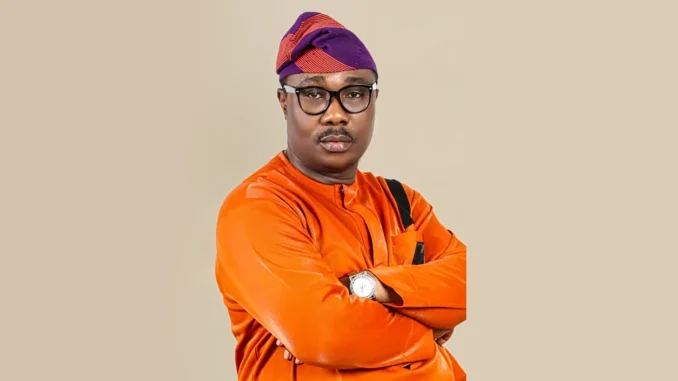
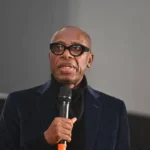
Chief Stanley Osifo also known as Osifo Osayamen Stanley is a Nigerian businessman, entrepreneur, and politician from Edo State who became a nationally trending name in April and May 2026 when he emerged as the only challenger to President Bola Ahmed Tinubu in the All Progressives Congress (APC) presidential primary election, purchasing the party’s ₦100 million nomination and expression of interest forms and contesting the ticket under his campaign slogan “Metamorphosis 2027.”
His boldness in stepping forward as the sole alternative candidate in a primary whose outcome was universally regarded as predetermined in a political environment where virtually every APC governor, senator, and party leader had lined up to endorse the incumbent made him one of the most talked-about political personalities in Nigeria in the weeks surrounding the primary.
On May 24, 2026, when the results of the nationwide APC presidential primary were announced at the Bola Ahmed Tinubu International Conference Centre in Abuja, President Tinubu had secured 10,999,162 votes to Osifo’s 16,503 a predictable outcome by any measure. Still, one that did nothing to diminish the significance of a man who had, at the very least, dared to show up when no one else would.
| Osifo Osayamen Stanley (also known as Chief Stanley Osifo) | |
|---|---|
 Osifo Osayamen Stanley (also known as Chief Stanley Osifo): History · Bio · Photo
|
|
| Wiki Facts & About Data | |
| Full Name: | Osifo Osayamen Stanley (also known as Chief Stanley Osifo) |
| Born: | Approximately 1976 (age 50 as of 2026) |
| Age: | 50 years old (as of 2026) |
| Birthplace: | Oluku Ward, Ovia North-East Local Government Area, Edo State, Nigeria |
| State of Origin: | Edo State (Ovia North-East LGA) |
| Nationality: | Nigerian |
| Occupation: | Businessman, Entrepreneur, Politician |
| Religion: | Christianity |
| Net Worth: | Not publicly disclosed; financially self-funded in politics |
Early Life
Chief Stanley Osifo was born in approximately 1976 in Oluku Ward, in the Ovia North-East Local Government Area of Edo State one of Nigeria’s most culturally rich and historically significant states, situated in the South-South geopolitical zone.
He is about 50 years old as of 2026, a figure derived from earlier records that placed him at 42 years old in 2018–2019 when he first emerged as a presidential aspirant under the Peoples Democratic Party.
Oluku is a peri-urban community near Benin City the historic capital of Edo State and the seat of the ancient Benin Kingdom.
Growing up in this environment meant coming of age in a setting defined by the complex interplay of Edo cultural pride, urban ambition, and the economic pressures facing communities in Nigeria’s oil-producing South-South region.
The Benin City area with its thriving commercial character, its proximity to markets, its entrepreneurial culture, and its residents’ reputation for enterprise and resilience shaped the young Osifo’s business-oriented instincts from an early age.
Details of his parents and extended family background have not been publicly disclosed in any of the media coverage surrounding his political activities. What is consistently noted is that Osifo grew up with a sense of ambition and civic consciousness that led him toward both business and, eventually, national politics.
He has described himself publicly as “a patriotic Nigerian driven by a strong passion to make the country one of the greatest nations in the world” a statement that, whatever one makes of his political prospects, speaks to a genuine conviction about Nigeria’s potential that has apparently motivated him across multiple presidential bids over nearly a decade.
Education
Stanley Osifo received his early education entirely in Benin City. He attended Payne Primary School in Benin City for his basic education before proceeding to Edokpolo Grammar School, also in Benin City, for his secondary school education. Edokpolo Grammar School is one of Benin City’s well-established secondary schools an institution that has produced a number of notable Edo State alumni across various professional fields.
He subsequently made the move to Lagos for his university education, enrolling at Lagos State University (LASU) one of Nigeria’s prominent state universities, located in Ojo, Lagos. At LASU, he completed both a Bachelor of Science (B.Sc.) and a Master of Science (M.Sc.) degree, giving him postgraduate academic credentials that he has deployed in his public self-presentation as a policy-oriented political aspirant.
The specific disciplines in which he obtained these degrees have not been widely publicised in the available public record, though his public policy positions spanning economics, agriculture, water resources, healthcare, security, and energy suggest a broadly interdisciplinary educational orientation.
His time in Lagos at LASU also gave him the exposure, networks, and cosmopolitan experience of Nigeria’s commercial capital that would later inform his business career and his understanding of the national economic dynamics he has positioned himself as wanting to reform.
Career
Business Career
Before his emergence as a political figure, Stanley Osifo built his reputation primarily as a businessman and trader.
He has been described across multiple credible media profiles as a trader and business mogul with roots in private enterprise, and has consistently described himself in interviews as an international entrepreneur suggesting business activities that extend beyond the domestic Nigerian market.
The specific sectors and nature of his business interests have not been comprehensively documented in the public domain, which is not unusual for Nigerian businesspeople who operate primarily in trading, logistics, and private sector commerce rather than in publicly listed or regulated industries.
What is clearly established is that he is a self-funded political actor a point he has made with evident pride in multiple interviews, dismissing suggestions that his political bids have been financially backed by external interests, including speculations that the incumbent president or party establishment had sponsored his participation to provide a veneer of competitive legitimacy to primaries that were widely regarded as foregone conclusions.
He has consistently maintained that his political ambitions are self-driven, self-funded, and rooted in genuine conviction about Nigeria’s need for transformational leadership.
His willingness to spend ₦100 million on APC nomination and expression of interest forms an enormous sum by any standard underscores the financial seriousness with which he approaches his political ambitions, regardless of the electoral odds. In 2019, he similarly spent ₦12 million on PDP nomination forms ahead of the 2019 presidential election, though he did not ultimately contest the primaries at that time.
Political Career
First Presidential Bid – PDP (2018–2019)
Stanley Osifo’s political ambitions surfaced publicly for the first time in the 2018–2019 electoral cycle, when he declared an intention to contest for the Nigerian presidency under the Peoples Democratic Party (PDP).
At the time, he was 42 years old making him one of the younger aspirants to have shown serious interest in the office in that cycle. He purchased the PDP nomination form, valued at ₦12 million, formally signalling his intent. However, he did not ultimately contest the PDP presidential primaries, with the reasons not publicly elaborated upon at the time.
Despite the non-completion of his 2019 bid, the declaration gave him his first experience of Nigeria’s national political arena and introduced his name to a broader public than his business profile had previously reached. It also established a pattern of audacious political self-declaration that would become the defining characteristic of his public identity.
2026 APC Presidential Primary – Challenging Tinubu
The most consequential and nationally visible phase of Stanley Osifo’s political career unfolded between April and May 2026, when he became the first and ultimately the only APC member to publicly declare an intention to challenge incumbent President Bola Ahmed Tinubu for the party’s 2027 presidential ticket.
His declaration in April 2026 came amid a political environment in which virtually no prominent APC figure was willing to challenge the sitting president.
Every APC governor across Nigeria’s 36 states, the vast majority of APC senators, House of Representatives members, and party officials had either formally endorsed Tinubu’s second-term bid or maintained a conspicuous silence that amounted to the same thing.
It was against this backdrop of near-total party conformity that Osifo’s declaration and his subsequent purchase of the ₦100 million APC nomination and expression of interest forms made national headlines.
His path to the forms was itself not smooth. He publicly alleged, in the days following his declaration, that he and other potential aspirants were being systematically denied access to the APC’s nomination forms that payment details were being withheld and that the party machinery was creating bureaucratic barriers to prevent any challenger from formalising their candidacy.
The allegation sparked significant national debate about the state of internal democracy within the APC and the broader question of whether Nigeria’s ruling party was capable of genuinely competitive internal processes. The APC and its officials denied the allegations, and Osifo ultimately obtained and paid for the forms.
His “Metamorphosis 2027” campaign centred on a comprehensive reform agenda: addressing Nigeria’s unemployment crisis, tackling insecurity, rebuilding the economy through diversification beyond oil, strengthening healthcare and water resource infrastructure, improving agricultural productivity, and advancing regional integration and national cohesion.
He described his vision as repositioning Nigeria for sustainable growth and presented himself as the patriotic outsider whose lack of establishment connections was, in fact, his most important qualification for the office.
The APC presidential primary was conducted nationwide across all 8,809 wards in Nigeria’s 774 local government areas on May 23–24, 2026. The results confirmed what virtually every political analyst had predicted: President Tinubu swept the primary with a landslide of 10,999,162 votes, while Stanley Osifo received 16,503 votes across the country.
In some states including Borno, where Osifo received zero votes the result reflected the near-total grip of the incumbent’s political machinery on the party’s structure. In his own South-South region, where some observers expected him to at least register a credible showing, the results were similarly discouraging: in Bayelsa State, for example, he polled only 5 votes.
The national result was announced at the Bola Ahmed Tinubu International Conference Centre in Abuja on May 24, 2026, by the Chairman of the APC Presidential Primaries Committee, Senator Anyim Pius Anyim, who confirmed both Tinubu and Osifo as the two aspirants in the exercise before declaring Tinubu the winner. President Tinubu was subsequently presented with the APC Certificate of Return and the party flag as its 2027 presidential candidate.
Osifo, in a short video that trended on social media following the announcement of results in some states, described himself as “a strong party man” and pledged to accept the outcome and remain in the APC.
His gracious post-primary statement stood in contrast to the scepticism expressed by some observers, who questioned the legitimacy of the process and the context of Osifo’s candidacy with some social media commentators suggesting his participation was less a genuine democratic challenge than a contractual arrangement to provide the primary with a minimum of competitive optics. Osifo firmly denied such characterisations, insisting his ambition was his own.
Awards & Recognition
- First aspirant to publicly declare intention to contest the APC presidential ticket against incumbent President Bola Tinubu ahead of the 2027 general elections (April 2026)
- Only challenger to President Tinubu in the APC presidential primary election (May 23–24, 2026)
- Polled 16,503 votes in the 2026 APC presidential primary the sole alternative candidate in a nationwide exercise across 8,809 wards in 774 LGAs
- Self-funded political actor purchased ₦100 million APC presidential nomination and expression of interest forms in 2026
- Previously purchased PDP presidential nomination form (₦12 million) ahead of the 2019 elections
- BSc and MSc graduate of Lagos State University (LASU)
Social Media
Stanley Osifo maintained an active social media presence during the 2026 APC presidential primary campaign period, using platforms including Facebook and X (formerly Twitter) to disseminate his campaign messaging, respond to critics, and provide updates on the status of his nomination form acquisition and the Metamorphosis 2027 agenda. His social media activity grew significantly as national media coverage of his candidacy increased in April and May 2026. Following the conclusion of the primary on May 24, 2026, a video of him commenting on the unfolding results trended widely on social media, drawing hundreds of thousands of views and reactions from Nigerians across the political spectrum.
Personal Life
Chief Stanley Osifo has maintained a thoroughly private personal life throughout his public career as a businessman and politician.
Details of his marital status, wife, and children if any have not been disclosed in any of the public-facing media coverage of his political activities, and he has not spoken about his family in publicly documented interviews.
This level of personal privacy is not uncommon among Nigerian businesspeople-turned-politicians who prefer to keep their families shielded from the often harsh and invasive environment of Nigerian political commentary and social media scrutiny.
He is a Christian. He is described in available profiles as a person of firm personal convictions someone willing to spend very large sums of money in pursuit of political goals that most observers regard as unachievable in the current political configuration, which suggests either genuine idealism, a high tolerance for calculated risk, or some combination of the two.
His insistence on describing himself as “self-funded” and his dismissal of claims that he was a “stooge” or a surrogate candidate reflect a man who takes the integrity of his stated motivations seriously, whatever the ultimate interpretation of events.
He is known to be active in Abuja political circles and has positioned himself as a policy thinker with a serious agenda for Nigerian reform maintaining a consistent public focus on economic diversification, security, healthcare, agriculture, water resources, and regional equity as the pillars of what he believes Nigeria’s next government must prioritise.
Net Worth
Chief Stanley Osifo’s personal net worth has not been publicly disclosed, and no verified independent estimates are available. What can be reliably inferred from his actions is that he is a person of considerable personal financial means.
The combined expenditure on his two presidential bids alone ₦12 million on PDP forms in 2019 and ₦100 million on APC forms in 2026 totals ₦112 million, an amount that, even accounting for the possibility of external contributions in some measure, reflects a level of personal financial capacity well above the average Nigerian.
His description of himself as an “international entrepreneur” engaged in private enterprise across multiple years suggests additional business-generated wealth that has not been publicly quantified.
As with many Nigerian businesspeople whose wealth is generated in trading, logistics, and private sector enterprise rather than through publicly disclosed corporate structures, the precise figure of his net worth remains a matter of inference rather than documented fact.
He is, by all available evidence, a financially independent actor in the Nigerian political space a characterisation that, at the very least, distinguishes him from the class of politicians entirely dependent on political patronage for their financial survival.
FAQs
Who is Stanley Osifo?
Chief Stanley Osifo (also known as Osifo Osayamen Stanley) is a Nigerian businessman, entrepreneur, and politician from Oluku Ward in Ovia North-East LGA of Edo State. He gained national prominence in 2026 as the only challenger to President Bola Tinubu in the APC presidential primary election, under his “Metamorphosis 2027” campaign. He is approximately 50 years old as of 2026.
What did Stanley Osifo do in the 2026 APC presidential primary?
Stanley Osifo became the first aspirant to publicly declare an intention to challenge President Tinubu for the APC presidential ticket ahead of the 2027 general elections. He purchased the party’s ₦100 million nomination and expression of interest forms and stood as the only challenger in the primary held on May 23–24, 2026. The final result saw President Tinubu receive 10,999,162 votes while Osifo polled 16,503.
What is Metamorphosis 2027?
Metamorphosis 2027 was Stanley Osifo’s campaign platform a policy programme focused on repositioning Nigeria through economic diversification, security reform, agricultural development, universal healthcare, improved water resources, and regional integration. He used the term “metamorphosis” to symbolise the transformational change he argued Nigeria needed.
Where is Stanley Osifo from?
Stanley Osifo hails from Oluku Ward in Ovia North-East Local Government Area of Edo State, in Nigeria’s South-South geopolitical zone. Oluku is a community near Benin City, the historic capital of Edo State.
Where did Stanley Osifo go to school?
Stanley Osifo attended Payne Primary School and Edokpolo Grammar School in Benin City, before proceeding to Lagos State University (LASU) where he obtained both a Bachelor of Science (B.Sc.) and a Master of Science (M.Sc.) degree.
Has Stanley Osifo contested for president before 2026?
Yes. Stanley Osifo first declared a presidential ambition in 2018–2019, when he was a 42-year-old aspirant under the Peoples Democratic Party (PDP). He purchased the PDP nomination form for ₦12 million but did not ultimately contest the primaries at that time.
Was Stanley Osifo sponsored by Tinubu?
This allegation circulated widely on Nigerian social media during and after the 2026 APC primary. Stanley Osifo firmly denied being sponsored by President Tinubu or any other political figure, insisting that his ambition and his funding were entirely his own. The allegation was never substantiated with documentary evidence.
What was Stanley Osifo’s response to the APC primary result?
In a trending video, Osifo described himself as “a strong party man” and pledged to accept the outcome of the primary and remain in the APC. He expressed his commitment to the party and did not publicly contest the credibility of the result.
What is Stanley Osifo’s net worth?
Stanley Osifo’s net worth has not been publicly disclosed. His willingness to self-fund two presidential bids spending a combined ₦112 million on nomination forms alone suggests a person of considerable personal financial means, consistent with his self-description as an international entrepreneur.
Conclusion
The story of Chief Stanley Osifo and the 2026 APC presidential primary is, at its core, a story about the right and the cost of showing up. In a political system where incumbency commands almost total institutional loyalty, where party machineries are efficiently deployed to eliminate competition before it can breathe, and where the social consequences of challenging a sitting president within his own party can be severe and lasting, Osifo chose to show up anyway. He spent ₦100 million for the privilege. He received 16,503 votes nationwide. And he did it, he maintains, of his own free will and his own conviction that Nigeria needs a different kind of leadership.
Whether one accepts that characterisation entirely or regards his candidacy with the scepticism many observers expressed, the episode placed his name in the national record at a historically significant moment. The 2026 APC presidential primary the first held since Tinubu’s 2023 election victory will be remembered, among other things, as the primary that had exactly one challenger. And that challenger’s name was Stanley Osifo. Whatever the future holds for his political ambitions, that is a fact that no election result can undo.
Related People


Leave a Reply