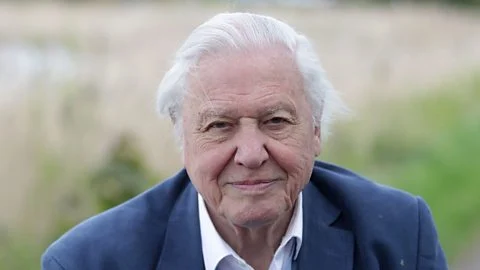
Sir David Frederick Attenborough is, by any reasonable measure, the most beloved and consequential nature broadcaster who has ever lived.
Over a career spanning eight extraordinary decades from the earliest days of British television in the 1950s to the global streaming platforms of 2026 he has brought the wonders, mysteries, and fragile beauty of the natural world into the living rooms of hundreds of millions of people on every continent on earth.
His voice, his curiosity, and his deep moral passion for the planet he has spent a lifetime exploring have made him not merely a television presenter but a cultural institution, a scientific communicator of genius, and a conscience for an entire civilization.
On 8 May 2026, Sir David Attenborough celebrated his 100th birthday becoming a centenarian while still actively engaged in storytelling about the natural world, still being celebrated with concerts at the Royal Albert Hall and tributes from heads of state, and still inspiring global audiences to see and protect the planet they share. This is the complete story of his remarkable life.
| Sir David Frederick Attenborough | |
|---|---|
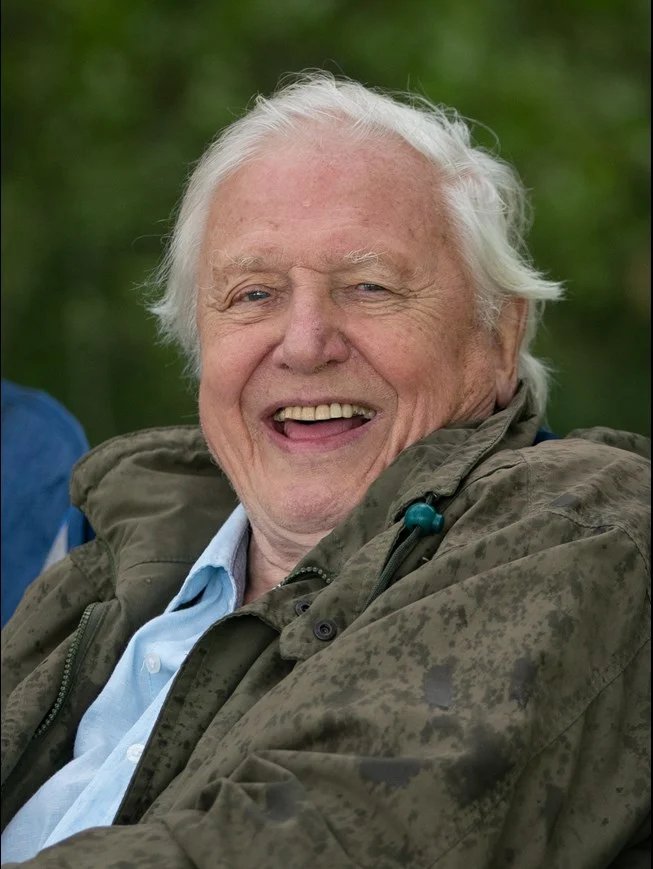 Sir David Frederick Attenborough: History · Bio · Photo
|
|
| Wiki Facts & About Data | |
| Full Name: | Sir David Frederick Attenborough |
| Born: | 8 May 1926 |
| Age: | 100 years old |
| Birthplace: | Isleworth, Middlesex, London, England |
| Nationality: | British |
| Occupation: | Broadcaster, Natural Historian, Writer, Documentary Filmmaker |
| Religion: | Agnostic |
| Parents: | Father: Frederick Levi Attenborough (Principal, University College Leicester); Mother: Mary Clegg (founding member, Marriage Guidance Council) |
| Siblings: | Elder brother: Sir Richard Attenborough (actor and director, deceased 2014); younger brother: John Attenborough (motor industry executive) |
| Spouse: | Jane Elizabeth Ebsworth Oriel (married 1950; died 1997) |
| Children: | Robert Attenborough (Senior Lecturer in Bioanthropology, Australian National University); Susan Attenborough (former primary school headmistress) |
| Net Worth: | Estimated £12 million – $35 million USD (varies by source) |
Early Life
David Frederick Attenborough was born on 8 May 1926 in Isleworth, Middlesex then a county to the west of London, now absorbed into Greater London. He was the middle of three sons born to Frederick Levi Attenborough and Mary Clegg. His father was a formidably accomplished man: a scholar, academic administrator, and eventually the Principal of University College, Leicester (now the University of Leicester). His mother was a compassionate and civic-minded woman who was a founding member of the Marriage Guidance Council. The family grew up on the campus of University College in Leicester an upbringing steeped in intellectual life, academic rigor, and a deep regard for knowledge.
The Attenborough household was also one of remarkable moral courage. During the Second World War, Frederick and Mary Attenborough took in two Jewish refugee sisters Helga and Irene Bejach who had arrived in Britain via the Kindertransport programme, the evacuation of Jewish children from Nazi Germany. For young David, growing up with these refugee sisters as near-family members instilled from the earliest age a deep understanding of humanity’s capacity both for destructive cruelty and for redemptive compassion values that would later underpin his environmental advocacy.
From boyhood, David was captivated by the natural world. He spent hours collecting fossils, natural specimens, and stones from the grounds of the university campus, beginning a fascination with geology and the history of life on earth that has never left him. A pivotal moment came in 1936, when David and his elder brother Richard attended a lecture at De Montfort Hall in Leicester by Grey Owl (the conservationist Archibald Belaney), who spoke passionately about the urgency of protecting the natural world. Richard Attenborough later recalled that David was “bowled over” by Grey Owl’s warnings of ecological disaster an early seed of the conservationist conviction that would define his life’s work.
His elder brother, Richard Attenborough, went on to become one of Britain’s greatest actors and directors (Jurassic Park, Gandhi, Brighton Rock). His younger brother, John Attenborough, pursued a career in the motor industry as an executive at Alfa Romeo. The three brothers, though they went in vastly different professional directions, remained close throughout their lives.
Education
David Attenborough received his secondary education at Wyggeston Grammar School for Boys in Leicester the same school attended by his brothers. The school’s proximity to the university campus made it a natural choice for the Attenborough children, and it offered a strong academic foundation. In 1945, David won a scholarship to read Natural Sciences at Clare College, Cambridge one of the University of Cambridge’s most prestigious colleges where he studied geology and zoology. He was a member of the undergraduate Sedgwick Club, Cambridge’s geology society. He graduated in 1947 with a degree in natural sciences, completing his undergraduate education at one of the world’s finest universities with a specialism in the two disciplines that would define his entire career.
Following his graduation, Attenborough fulfilled his national service obligation by serving two years in the Royal Navy, stationed in North Wales and the Firth of Forth in Scotland. After leaving the Navy, he took a brief and unhappy position editing children’s science textbooks for a publishing company. He quickly realized it was not the environment he needed and applied to join the BBC first as a radio talk producer. His application was rejected, but his CV attracted the interest of Mary Adams, head of the BBC’s new television service, who offered him a three-month training course. He accepted, and a career of astonishing consequence began.
Over his lifetime, he has received more than 32 honorary degrees from British universities more than any other person in the country including honorary doctorates from Oxford, Cambridge, and Durham, among many others.
Career
Joining the BBC: Zoo Quest and the Birth of Wildlife Television (1952–1964)
David Attenborough joined the BBC as a trainee producer in 1952, beginning his professional career in television at a time when the medium was barely a decade old as a mass phenomenon. His first assignments were in quiz shows and musical series not quite the calling he had imagined. But in 1954, his life changed with the creation of Zoo Quest, a programme he co-created with reptile curator Jack Lester of London Zoo. The concept was revolutionary for its time: instead of simply bringing animals to the studio, the team would travel to remote locations around the world Sierra Leone, British Guiana, Indonesia, Paraguay and film wildlife in their natural habitats, returning with live animals for the zoo. The programme was an immediate sensation, and Attenborough’s calm, curious, and infectiously enthusiastic on-screen presence made him an instant favourite with British audiences.
Zoo Quest ran for a decade and took Attenborough to more than 40 countries, laying the foundation of his encyclopaedic knowledge of the natural world and establishing what would become the defining template of wildlife television: a knowledgeable, passionate presenter, exotic locations, extraordinary animal behaviour, and an implicit invitation to the audience to share in the wonder of discovery.
Controller of BBC Two and Director of Programming (1965–1972)
In 1965, Attenborough made a dramatic career pivot accepting the role of Controller of BBC Two, the BBC’s new second television channel. It was a decision that surprised many in the industry, taking him away from the natural history programmes he loved and plunging him into the world of broadcast management. But his contribution as a television executive was extraordinary. During his tenure as Controller and, later, as Director of Programming for BBC Television (a role he held from 1969 to 1972), he commissioned and championed some of the most important and innovative programmes in British television history including Kenneth Clark’s Civilisation, Jacob Bronowski’s The Ascent of Man, The Forsyte Saga, and crucially, he also gave the green light to Monty Python’s Flying Circus. His tenure helped establish BBC Two as a channel of genuine intellectual and creative distinction.
In 1973, having risen as high as it was possible to go in BBC management, Attenborough made the decision to step back from executive life entirely turning down the role of Director-General of the BBC to return to his true passion: making natural history programmes. It was a choice that would ultimately enrich the world far beyond what any executive role could have achieved.
Life on Earth and The Life Series (1979–2008)
The defining chapter of David Attenborough’s career as a filmmaker began in 1979 with the broadcast of Life on Earth a 13-part BBC series chronicling the entire history of life on our planet, from the first single-celled organisms to the emergence of human beings. The production was unprecedented in its ambition: the team traveled to 40 countries and filmed 600 species, deploying new filming techniques and a narrative scope that had never been attempted before in natural history television. The series was a global phenomenon watched by an estimated 500 million people worldwide and transformed Attenborough from a well-known British television personality into a genuinely global figure of cultural authority.
Life on Earth launched what became known as The Life Collection a series of nine authored documentaries with the BBC Natural History Unit that would span the next three decades:
- Life on Earth (1979) the history of life from its origins
- The Living Planet (1984) the diverse habitats of Earth
- The Trials of Life (1990) animal behaviour and survival
- Life in the Freezer (1993) the natural history of Antarctica
- The Private Life of Plants (1995) plants as dynamic organisms (Peabody Award winner)
- The Life of Birds (1998) avian behaviour worldwide (second Peabody Award)
- The Life of Mammals (2002–2003) mammalian behaviour using infrared and low-light cameras
- Life in the Undergrowth (2005) the world of invertebrates
- Life in Cold Blood (2008) reptiles and amphibians
Each series broke new ground technically, scientifically, and narratively each one an event in the television calendar of multiple countries. Together, The Life Collection represents one of the most sustained and remarkable achievements in the history of documentary filmmaking.
The Blue Planet, Planet Earth, and the Modern Era (2001–2023)
From 2001 onward, Attenborough’s name became synonymous with a new generation of landmark BBC natural history productions now narrated rather than presented, but bearing the same authoritative voice and moral seriousness. The Blue Planet (2001) was the first comprehensive survey of the world’s oceans, utilizing new deep-water filming technology to reveal habitats never previously filmed. Planet Earth (2006) the first BBC series produced entirely in high definition became the most watched factual series in the world, with an audience of over 500 million in 130 countries. Frozen Planet (2011), Planet Earth II (2016), Blue Planet II (2017), Our Planet (2019, Netflix), The Green Planet (2021), Planet Earth III (2023), Wild Isles (2023), and Our Planet II (2023) continued the tradition of visually spectacular, scientifically rigorous, and emotionally compelling natural history television.
In 2010, he became a pioneer of 3D documentary filmmaking with Flying Monsters 3D, the first in a series of 3D natural history films. He repeated this innovation in 2025 with the cinematic release of Ocean with David Attenborough a sweeping theatrical documentary on the life, fragility, and resilience of the planet’s oceans, which opened in cinemas globally and received widespread critical acclaim. At the premiere in London in May 2025, he was met by King Charles III.
Environmental Advocacy
In his later career, particularly from the 2010s onward, Attenborough became increasingly and explicitly outspoken about the environmental crisis. His 2019 BBC documentary Climate Change The Facts issued a direct warning that the failure to act could lead to “the collapse of our societies.” His 2020 Netflix documentary David Attenborough: A Life on Our Planet described as his personal “witness statement” reflected on both his career and the accelerating environmental crisis, and concluded with a vision of hope for how the world could still be restored if humanity chose to act. In 2021, he became the oldest person ever to address the United Nations Climate Change Conference (COP26) in Glasgow, where he told world leaders: “In my lifetime, I’ve observed a dreadful fall. Yours could and should be a beautiful recovery.”
In 2022, the United Nations Environment Programme named him a Champion of the Earth the UN’s highest environmental honour for his dedication to research, documentation, and advocacy for the protection of nature and its restoration. In 2025, at the age of 98, he released A Gorilla Story on Netflix returning to a family of gorillas he had first filmed 50 years earlier, and exploring what their story reveals about the possibilities of conservation.
Awards & Honours
- BAFTA Fellowship (1980) the highest honour awarded by the British Academy of Film and Television Arts
- Kalinga Prize (1981) UNESCO’s prize for the popularisation of science
- Knight Bachelor (1985) first knighthood from the British Crown
- Fellow of the Royal Society (FRS) (1983)
- Eight BAFTA Awards across his career
- Three Primetime Emmy Awards for Outstanding Narrator (2018, 2019, 2020)
- One Daytime Emmy Award for Outstanding Daytime Personality – Non-Daily (2025) making him the oldest ever Daytime Emmy winner, for Secret Lives of Orangutans
- Two Peabody Awards for The Private Life of Plants (1995) and The Life of Birds (1998)
- Prince of Asturias Award for Social Sciences (2009)
- Order of Merit (2005) one of the UK’s most prestigious personal honours, awarded by the Sovereign
- Indira Gandhi Prize for Peace, Disarmament and Development (2019)
- UN Environment Programme Champions of the Earth Lifetime Achievement Award (2022)
- Knight Grand Cross of the Order of St Michael and St George (2022) a second knighthood, for services to television broadcasting and conservation
- Perfect World Foundation Award (2018)
- Over 32 honorary degrees from British universities more than any other person in UK history, including from Oxford, Cambridge, and Durham
- The only person to have won BAFTA Awards in black-and-white, colour, high-definition, 3D, and 4K resolution
- More than 40 animal and plant species named after him, as well as a constellation
Social Media
Sir David Attenborough joined Instagram on 24 September 2020, making his debut with a short video characteristically beginning with the words “I come to Instagram as a newcomer.” Within 24 hours, he had gained 1 million followers the fastest a person had ever reached that milestone on the platform at the time. His account was immediately used to promote his A Life on Our Planet Netflix documentary and to advocate for environmental action. His Instagram handle is @davidattenborough.
His arrival on social media at the age of 94 was widely celebrated as both a practical act of environmental communication and a generational bridge Attenborough using the platforms of younger generations to carry his message to new audiences. His posts have consistently attracted tens of millions of views, and he has used the platform for campaigns including raising awareness of ocean health, biodiversity loss, and the urgency of climate action.
Personal Life
In 1950, David Attenborough married Jane Elizabeth Ebsworth Oriel a woman he had met when they were both in their early twenties. The couple married young, moved to Richmond Upon Thames in south-west London, and began their family. They had two children: a son, Robert, who became a Senior Lecturer in Bioanthropology at the Australian National University in Canberra; and a daughter, Susan, who was a primary school headmistress before stepping away from teaching to work alongside her father. The couple’s marriage, which lasted 47 years, was by all accounts a deeply loving partnership. Jane was an anchor of stability and support through the decades of filming expeditions that took her husband to the remotest corners of the planet.
In 1997, Jane Attenborough passed away after suffering a brain haemorrhage. She was 70 years old. Her death was a profound blow to David, who has spoken movingly about how the loss affected him confessing that he found solace and healing in returning to work. He has lived alone at his family home in Richmond since her death, having described the area as his “favourite place on earth” for its blend of suburban tranquility and proximity to Richmond Park’s nature. He has never remarried.
Attenborough is agnostic in religious terms noting that the concept of a benevolent deity is difficult to reconcile with the suffering he has witnessed in the natural world, while also acknowledging that he “lacks confidence” to identify as fully atheist. He is not a strict vegan but has significantly reduced his meat consumption and is a vocal advocate for plant-based diets as an environmental response. In 2013, he was fitted with a pacemaker, and in 2015 underwent surgery on both knees medical interventions that have not slowed him down.
He has spoken candidly about the regrets of fatherhood under the demands of his career acknowledging in a 2017 Radio Times interview that he regrets having been away from his children for long stretches during their upbringing due to filming commitments. This honesty about the personal cost of his professional dedication has only deepened public affection for him.
Latest News 100th Birthday (8 May 2026)
The most significant event in David Attenborough’s life in 2026 is one that no one expected him to reach and that everyone is celebrating unreservedly: his 100th birthday on 8 May 2026. The BBC scheduled a landmark celebration across its television and streaming platforms for the occasion, including the broadcast of David Attenborough’s 100 Years on Planet Earth on BBC One and iPlayer a documentary covering his extraordinary century-long relationship with the natural world. Two additional BBC specials were also commissioned: Making Life on Earth: Attenborough’s Greatest Adventure, offering behind-the-scenes insights into the landmark 1979 series, and Secret Garden, a new five-episode programme exploring the hidden stories within Britain’s gardens.
At London’s Royal Albert Hall, a star-studded concert was organised in his honour, featuring broadcasters including Sir Michael Palin and Steve Backshall, and musical performances by Bastille frontman Dan Smith performing a classical version of Pompeii with the BBC Concert Orchestra and Icelandic post-rock band Sigur Rós, whose song Hoppípolla has become one of the most iconic pieces of music associated with his Planet Earth series. International streaming platform BritBox curated an Attenborough retrospective collection, and organisations around the world planned their own tributes and celebrations.
His most recent documentary work A Gorilla Story (2025, Netflix) and Ocean with David Attenborough (2025) both released in the months leading up to his centenary, demonstrated that at 99, he was still producing work of urgency, beauty, and global impact.
Net Worth
Sir David Attenborough’s net worth is estimated at between £10 million and £12 million by UK-based sources, with some international estimates placing it as high as $35 million USD. The variation in estimates reflects different methodologies and the inclusion or exclusion of intellectual property assets.
His production company, David Attenborough (Productions) Limited, holds significant assets, including a reported cash reserve of approximately £2.3 million. He reportedly earns approximately £7,206 per minute for his television narration work a figure that amounted to around £4.2 million in a recent year.
His income derives from: BBC fees for narration, presenting, and production; book royalties from his extensive bibliography; fees from Netflix and Apple TV+ for streaming documentaries; speaking engagement income; and the ongoing commercial performance of classic BBC series. He has lived in the same home in Richmond since 1951 a choice that speaks to his profoundly unpretentious lifestyle and his stated preference for simplicity and closeness to nature over material display.
Books
- Zoo Quest to Guiana (1956)
- Zoo Quest for a Dragon (1957)
- Life on Earth (1979) companion to the BBC series
- The Living Planet (1984)
- The Trials of Life (1990)
- The Private Life of Plants (1995)
- The Life of Birds (1998)
- The Life of Mammals (2002)
- Life on Air: Memoirs of a Broadcaster (2002) autobiography
- Life in the Undergrowth (2005)
- Adventures of a Young Naturalist: The Zoo Quest Expeditions (2017)
- Journeys to the Other Side of the World: Further Adventures of a Young Naturalist (2018)
- David Attenborough: A Life on Our Planet (2020) autobiography and environmental manifesto
- Our Planet (2019) children’s edition
- Ocean (2025) companion to the theatrical documentary
Filmography / Documentary Series
- Zoo Quest (BBC, 1954–1964) presenter and co-creator
- Life on Earth (BBC, 1979) writer and presenter
- The Living Planet (BBC, 1984)
- The Trials of Life (BBC, 1990)
- Life in the Freezer (BBC, 1993)
- The Private Life of Plants (BBC, 1995)
- The Life of Birds (BBC, 1998)
- State of the Planet (BBC, 2000)
- The Blue Planet (BBC, 2001) narrator
- The Life of Mammals (BBC, 2002–2003)
- Life in the Undergrowth (BBC, 2005)
- Planet Earth (BBC, 2006) narrator
- Life in Cold Blood (BBC, 2008)
- Flying Monsters 3D (Sky 3D, 2010)
- Frozen Planet (BBC, 2011) narrator and presenter
- Planet Earth II (BBC, 2016) narrator
- Blue Planet II (BBC, 2017) presenter and narrator
- Climate Change The Facts (BBC, 2019)
- Our Planet (Netflix, 2019) narrator
- David Attenborough: A Life on Our Planet (Netflix, 2020) presenter
- The Green Planet (BBC, 2021) presenter
- Planet Earth III (BBC, 2023) narrator
- Wild Isles (BBC, 2023) presenter
- Our Planet II (Netflix, 2023) narrator
- Mammals (BBC/Apple TV+, 2024) narrator
- Attenborough and the Jurassic Sea Monster (PBS/BBC, 2024)
- Ocean with David Attenborough (theatrical/streaming, 2025)
- A Gorilla Story (Netflix, 2025)
- David Attenborough’s 100 Years on Planet Earth (BBC, 2026)
- Life on Earth: Attenborough’s Greatest Adventure (BBC/PBS, 2026)
FAQs About David Attenborough
Who is David Attenborough?
Sir David Frederick Attenborough is a British broadcaster, natural historian, and writer widely regarded as the world’s greatest nature documentary presenter. Over an eight-decade career at the BBC and with streaming platforms, he has produced and narrated more than 100 films and series, bringing the natural world to hundreds of millions of viewers around the globe.
How old is David Attenborough?
David Attenborough was born on 8 May 1926. He celebrated his 100th birthday on 8 May 2026, becoming a centenarian.
Was David Attenborough married?
Yes. He married Jane Elizabeth Ebsworth Oriel in 1950. The couple had two children Robert and Susan and were married for 47 years until Jane’s death in 1997 from a brain haemorrhage. David has not remarried.
Where does David Attenborough live?
He lives in Richmond, South West London, in the same family home he has occupied since 1951. He has described Richmond as his favourite place on earth.
What is David Attenborough’s most famous documentary?
Life on Earth (1979) is widely considered his most groundbreaking series. Planet Earth (2006) became the most watched factual series in the world. Blue Planet II (2017) had a major global impact on public awareness of ocean plastic pollution.
Has David Attenborough been knighted?
Yes, twice. He received his Knight Bachelor in 1985, and was appointed a Knight Grand Cross of the Order of St Michael and St George in 2022 making him one of the very few people in British history to have received two knighthoods.
What is David Attenborough’s net worth?
His net worth is estimated at between £10–12 million (UK sources) and up to $35 million USD (international estimates), derived from BBC and streaming fees, book royalties, speaking engagements, and his production company.
What is David Attenborough’s religion?
He describes himself as agnostic he does not believe in God but says he lacks the confidence to call himself an atheist, and does not consider the theory of evolution to necessarily preclude the existence of a deity.
What did David Attenborough do at COP26?
In 2021, Attenborough became the oldest person ever to address the United Nations Climate Change Conference (COP26) in Glasgow. He told world leaders: “In my lifetime, I’ve observed a dreadful fall. Yours could and should be a beautiful recovery.”
How many species are named after David Attenborough?
More than 40 animal and plant species have been named in his honour, including Nepenthes attenboroughii (a giant carnivorous plant), and a constellation also bears his name.
Conclusion
On 8 May 2026, David Attenborough reached the age of 100 a milestone that feels, for this particular man, less like the end of a story and more like the perfect punctuation point in a narrative that has been building, decade by decade, film by film, for almost the entirety of the television age. He was born in 1926, two years before the first experimental television broadcast in Britain. He joined the BBC in 1952, when television was still a novelty. He helped build BBC Two into a channel of distinction. He spent three decades making the most ambitious natural history films ever conceived. He became the voice literally the voice through which successive generations have first encountered the astonishment of the living world. And in his final decades, as the world he has spent his life celebrating began to face an existential threat, he became its most eloquent and passionate defender.
He has won every award the broadcasting world knows how to give. He has had more species named after him than almost any other living person. He has spoken at the United Nations, addressed world leaders, joined Instagram at 94 and gained a million followers overnight, made films in 3D at 98, and released a theatrical documentary and a Netflix special at 99. He is, by any measure, one of the most consequential communicators in human history a man who used the new medium of television to give humanity a mirror in which to see the planet it shares with millions of other species, and to feel the weight of the responsibility that comes with being the only one capable of protecting them.
At 100, Sir David Frederick Attenborough remains what he has always been: curious, gentle, rigorous, hopeful, and entirely in love with the world he was born into. And the world, without question, is in love with him.
Related People

Leave a Reply