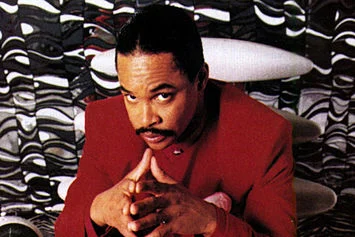
Roger Troutman was one of the most innovative and influential musicians in the history of American funk and R&B.
As the founder, frontman, and creative engine of the electro-funk band Zapp, he revolutionized the sonic landscape of the 1980s with his pioneering use of the talkbox, a device that transformed his voice into a hypnotic, robotic, deeply musical instrument that would influence generations of artists from West Coast hip-hop to modern R&B.
His 1995 collaboration with 2Pac and Dr. Dre on “California Love” introduced his signature sound to an entirely new generation, cementing his place in the pantheon of American popular music.
| Roger Troutman | |
|---|---|
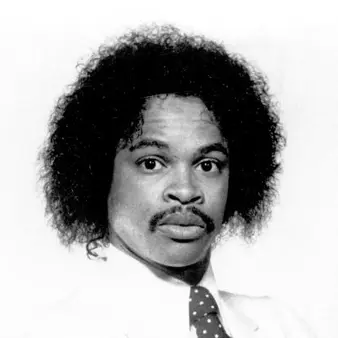 Roger Troutman: History · Bio · Photo
|
|
| Wiki Facts & About Data | |
| Full Name: | Roger Troutman |
| Stage Name: | Roger |
| Born: | November 29, 1951 |
| Age: | 74 years old |
| Death: | April 25, 1999 (aged 47) |
| Birthplace: | Hamilton, Ohio, USA |
| Nationality: | American |
| Occupation: | Singer, Musician, Songwriter, Record Producer |
| Parents: | Rufus Troutman Sr. (father) |
| Siblings: | Larry Troutman, Lester Troutman, Terry Troutman (and others) |
Early Life
Roger Troutman was born on November 29, 1951, in Hamilton, Ohio, a small city near Dayton, Ohio, that would prove to be a fertile breeding ground for extraordinary musical talent.
He was one of ten children in the Troutman family, a large, close-knit household where music was not just entertainment but a way of life. Their father, Rufus Troutman Sr., was so supportive of his children’s musical pursuits that he built a garage studio in their home so they could practice without disturbing the household, a remarkable act of parental encouragement that helped shape the career of an entire musical dynasty.
Growing up in Hamilton, Roger was inspired by the thriving Ohio funk scene of the era. Acts like Slave, Lakeside, Bootsy Collins, and The Ohio Players were local legends, and their music permeated the environment in which Roger and his brothers developed their skills. From a young age, Roger demonstrated mastery of multiple instruments, including guitar, bass, and keyboard, and showed a natural gift for composition and arrangement. He and his brothers Larry, Lester, and Terry began performing together informally before evolving into serious musicians.
Education
Roger Troutman was a graduate of Central State University in Wilberforce, Ohio, a historically Black university that has produced many distinguished alumni in the arts, sciences, and public service.
His formal education gave him a structured foundation that complemented his natural musical gifts. His first college-era band was called the Crusaders (not to be confused with the jazz group), with whom he recorded a single titled “Busted Surfboard”/”Seminole.”
Career
Early Music Career
Roger’s professional music journey began in the mid-to-late 1960s. As a teenager, he recorded early singles under the band name “Lil’ Roger and His Fabulous Vels” for the obscure Ohio-based Teen Records label in 1966. These recordings went largely unnoticed but represented the beginning of a lifelong dedication to musical innovation. In the 1970s, he and his brothers formed Roger and the Human Body, releasing their debut album Introducing Roger in 1976 on their independently owned Troutman Bros. Records label. Their debut single “Freedom” was released in 1977.
The Formation of Zapp
The Troutman brothers’ big break came when they caught the attention of legendary funk bassist Bootsy Collins at a local Ohio performance. Bootsy was deeply impressed and invited Roger to record at United Sound Studios in Detroit, the Parliament-Funkadelic base. Through Bootsy, the brothers were introduced to George Clinton, the towering genius of P-Funk, who signed them to his Uncle Jam Records label in 1979. Clinton also encouraged them to adopt the name Zapp, a name suggested by brother Terry, which they did.
In 1980, Zapp released their self-titled debut album, featuring the single “More Bounce to the Ounce”, one of the most instantly recognizable funk tracks ever recorded. Driven by Roger’s custom-built talkbox (the Electro Harmonix “Golden Throat” connected through a Moog Minimoog), the song climbed to number 2 on the Billboard Soul Singles chart and the album reached the top 20 of the Billboard 200. The talkbox sound, robotic, funky, and hypnotic, became the defining sonic signature of Zapp’s music and Roger’s entire career.
Zapp’s Golden Era (1980–1989)
From 1980 to 1985, Zapp was one of the hottest acts in American R&B and funk, releasing a string of gold-certified albums: Zapp (1980), Zapp II (1982), Zapp III (1983), and The New Zapp IV U (1985). The band scored major Top 10 R&B hits including “Dance Floor” (which hit number 1 on the R&B chart in 1982), “Be Alright,” “I Can Make You Dance,” “Heartbreaker,” “It Doesn’t Really Matter,” and the beloved ballad “Computer Love”, one of their most enduring songs and a significant crossover hit. Roger also launched a successful parallel solo career under the name simply “Roger.”
His 1981 debut solo album The Many Facets of Roger sold over a million copies, driven by a funky cover of Marvin Gaye’s “I Heard It Through the Grapevine” which reached number 1 on the R&B singles chart. His 1987 solo album Unlimited! was his most commercially successful solo effort, featuring the hit “I Want to Be Your Man,” which peaked at number 3 on the R&B chart. Throughout this period, Roger was also a prolific producer, working with rising artists and establishing himself as one of the most creative forces in Black American music.
Hip-Hop Influence and “California Love”
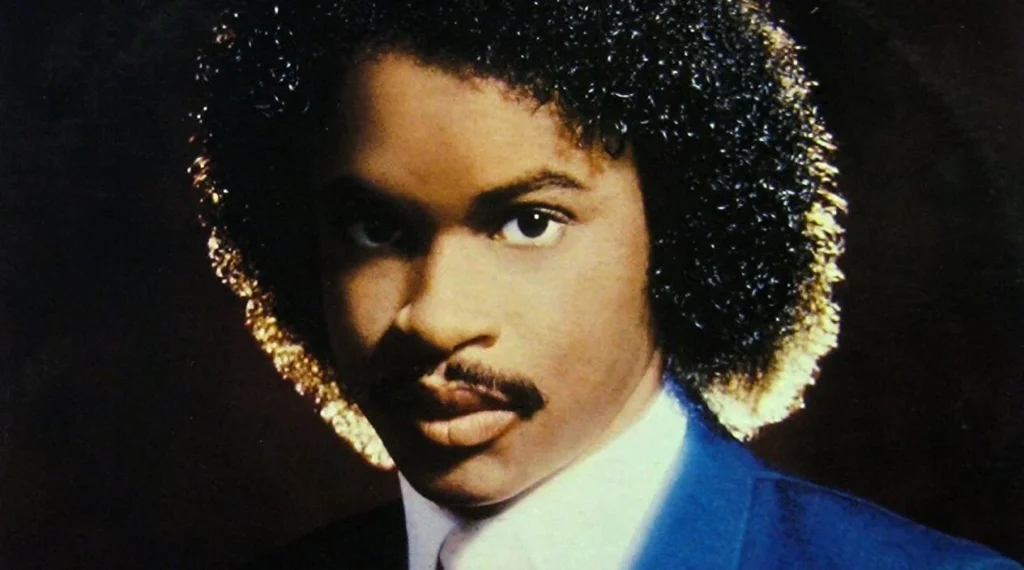
By the early 1990s, as Zapp’s direct commercial momentum slowed, a new generation of artists began mining the Troutman catalogue for samples. Zapp and Roger’s music became a foundational element of West Coast G-funk, the dominant sound of hip-hop in the early ’90s, with artists like Snoop Dogg, Ice Cube, and The Notorious B.I.G. heavily sampling their work. Roger participated directly in this cultural moment when he was tapped to contribute the iconic chorus of 2Pac’s “California Love” (1995), produced by Dr. Dre. Using his signature talkbox voice, Roger’s contribution turned the track into one of the most indelible recordings of the decade. “California Love” peaked at number 1 on the Billboard Hot 100 in July 1996 and was posthumously nominated for a Grammy Award for Best Rap Performance by a Duo or Group. In his final years, Roger also focused on community development work in Dayton’s poorest neighborhoods.
Death
On the morning of April 25, 1999, Roger Troutman was found shot and critically wounded outside his northwest Dayton recording studio. He had been shot multiple times in the torso. He died during emergency surgery at Good Samaritan Hospital and Health Center in Dayton. Hours later, his brother Larry Troutman was found dead in a car a few blocks away, with a single self-inflicted gunshot wound to the head. Witnesses reported that Larry’s vehicle matched a car seen leaving the scene. It is widely believed that Larry shot Roger following a dispute, possibly over financial matters related to their shared business, and then took his own life. Roger Troutman was 47 years old at the time of his death. The loss of both Roger and Larry devastated the Troutman family and the broader funk and hip-hop community.
Awards & Legacy
Roger Troutman was inducted into the Dayton Music Hall of Fame and the Cincinnati Black Music Walk of Fame.
His music has been sampled hundreds of times by artists around the globe across multiple generations. “California Love” earned a posthumous Grammy nomination.
His talkbox innovation influenced artists including T-Pain, Kanye West, Daft Punk, and countless others. Zapp’s album All the Greatest Hits (1993) became their best-selling commercial release.
Social Media
Roger Troutman passed away in 1999, before the era of social media. However, the official Zapp Band maintains an online presence in his honor. His legacy is celebrated across streaming platforms, fan communities, and hip-hop culture worldwide.
Personal Life
Roger Troutman’s personal life was deeply intertwined with his family and his music. He was famously devoted to his brothers and the collective project of Zapp.
He was known for his warm personality, his community spirit, and his dedication to Dayton, Ohio. Specific details about his romantic relationships and personal life beyond his music remain largely private in historical records.
The tragedy of his death at the hands of his own brother Larry added a devastating coda to one of the most remarkable careers in American music history.
Net Worth
Roger Troutman’s net worth at the time of his death in 1999 was not formally disclosed.
However, given his extensive catalog of gold-selling albums, publishing royalties, solo success, and his role in one of hip-hop’s biggest hits, his estate has generated significant ongoing royalty income.
His music continues to be sampled and licensed, making the Troutman estate a continuing revenue generator decades after his passing.
Discography
Zapp Albums
| Zapp | 1980 |
| Zapp II | 1982 |
| Zapp III | 1983 |
| The New Zapp IV U | 1985 |
| Zapp V | 1989 |
| Zapp & Roger: All the Greatest Hits | 1993 |
Solo Albums (as Roger)
| The Many Facets of Roger | 1981 |
| The Saga Continues… | 1984 |
| Unlimited! | 1987 |
FAQs
Who is Roger Troutman?
Roger Troutman was an American funk musician, singer, songwriter, and producer. He was the founder of the electro-funk band Zapp and is known for his pioneering use of the talkbox.
How did Roger Troutman die?
Roger Troutman was shot by his brother Larry Troutman on April 25, 1999, outside his Dayton recording studio. Larry subsequently died of a self-inflicted gunshot wound.
What is Roger Troutman best known for?
He is best known for founding Zapp, his talkbox-driven funk hits like “More Bounce to the Ounce” and “Computer Love,” and his iconic contribution to 2Pac’s “California Love” (1995).
What is the talkbox?
The talkbox is a device connected to a musical instrument (usually a keyboard or guitar) that routes sound through a tube into the performer’s mouth, allowing them to shape the tone with their vocal tract. Roger Troutman was its most famous popularizer in funk music.
Conclusion
Roger Troutman’s legacy endures as one of the most distinctive and influential in the entire history of American popular music.
His fusion of funk, electronic production, and the talkbox created a sound that was wholly original, impossible to replicate and impossible to forget. Across four decades of sampling and influence, his music has remained alive in every corner of hip-hop and R&B culture.
His tragic death at the hands of his own brother robbed the world of one of its great musical innovators, but the music he left behind is eternal. Roger Troutman was and remains a giant.
Related People


Leave a Reply