
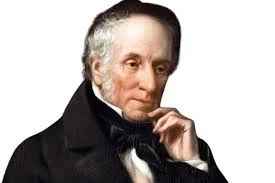
William Wordsworth was an English Romantic poet and Poet Laureate whose co-authorship with Samuel Taylor Coleridge of Lyrical Ballads (1798) is widely regarded as the founding document of the Romantic movement in English literature.
Born in the scenic fells of the Lake District in 1770, shaped by nature, political revolution, and personal loss, Wordsworth spent half a century crafting a body of poetry that placed the spiritual experience of the natural world, the dignity of common human life, and the growth of the individual mind at the centre of literary art.
His autobiographical epic The Prelude, continually revised throughout his life and published only after his death, is considered by many scholars the crowning achievement of English Romanticism. He served as Poet Laureate of Great Britain and Ireland from 1843 until his death in 1850.
| William Wordsworth | |
|---|---|
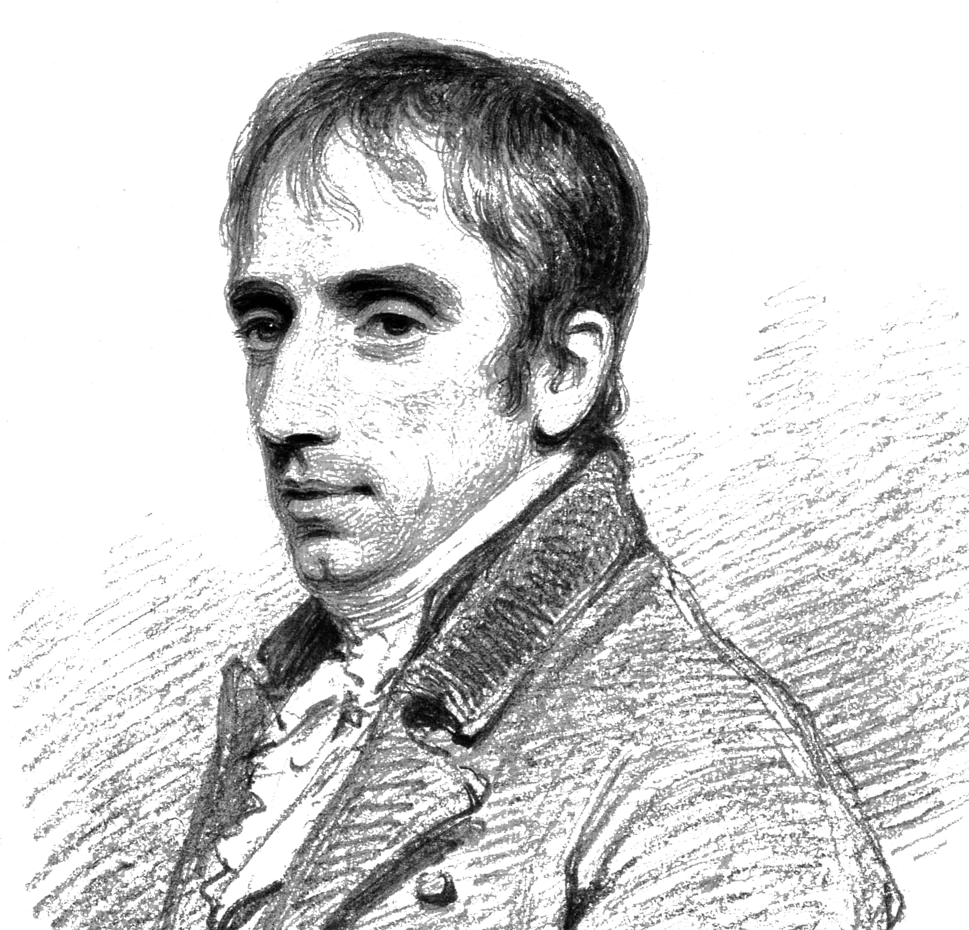 William Wordsworth: History · Bio · Photo
|
|
| Wiki Facts & About Data | |
| Full Name: | William Wordsworth |
| Born: | April 7, 1770 |
| Age: | (aged 80) |
| Death: | April 23, 1850 (aged 80) |
| Birthplace: | Cockermouth, Cumberland, England |
| Nationality: | British |
| Occupation: | Poet, Poet Laureate of Great Britain and Ireland |
| Parents: | John Wordsworth (father, law agent); Ann Cookson Wordsworth (mother) |
| Siblings: | Richard (brother); Dorothy Wordsworth (sister); John (brother); Christopher (brother) |
| Spouse: | Mary Hutchinson (married October 4, 1802) |
| Children: | 5 with Mary: John, Dora, Thomas, Catherine, William; and a daughter Caroline (with Annette Vallon) |
Early Life
William Wordsworth was born on April 7, 1770, in Cockermouth, a small market town on the River Derwent in the Cumberland region of north-western England, the heart of what is now the Lake District National Park. He was the second of five children of John Wordsworth, a law agent who served as estate manager for Sir James Lowther, and Ann Cookson Wordsworth. His mother died when he was only eight years old, in 1778, a loss of devastating emotional significance whose effects can be traced throughout his subsequent poetry. His father, John, died when William was 13, in 1783, leaving the children largely in the care of unsympathetic uncles and further intensifying the orphan’s heightened attentiveness to the natural world as a compensatory spiritual presence.
His childhood in the Lake District proved the formative foundation of his entire literary imagination. The hills, lakes, and fells of Cumberland, and the working rural communities that inhabited them, gave him both a vivid store of imagery and a deep conviction that the natural world was not merely beautiful but spiritually nurturing and morally instructive. He attended the grammar school at Hawkshead, where he was an enthusiastic student and began writing his first poems. In 1787, his first published poem appeared in the European Magazine, a sonnet written under the pseudonym Axiologus.
Education
William Wordsworth attended Hawkshead Grammar School from 1779 to 1787, where he received a rigorous classical education and was encouraged by his headmaster William Taylor to write poetry. In 1787, he enrolled at St John’s College, Cambridge University, where he studied for four years, graduating with a Bachelor of Arts degree in 1791. He was not a distinguished academic student, the university’s classical curriculum engaged him less than the reading, observation, and reflection he pursued independently, but Cambridge gave him intellectual breadth and introduced him to the world of ideas that would later inform his poetic philosophy.
Career
France, Revolution, and Early Poetry (1791–1795)
After graduating from Cambridge, Wordsworth travelled to France in 1791 and 1792, arriving in the fervent early years of the French Revolution. He was initially caught up in revolutionary idealism and became romantically involved with Annette Vallon, a French woman who bore his daughter Anne-Caroline in 1792. The outbreak of war between Britain and France, combined with financial constraints, forced Wordsworth to return to England before Caroline’s birth, a desertion that haunted his conscience for years. He returned to France with his sister Dorothy in 1802 to meet Caroline before marrying Mary Hutchinson. His earliest poetry publications, An Evening Walk (1793) and Descriptive Sketches (1793), showed promise without yet demonstrating his mature voice.
Collaboration with Coleridge and Lyrical Ballads (1795–1800)
The decisive turning point in Wordsworth’s career came in 1795 when he met Samuel Taylor Coleridge, a meeting that sparked one of the most productive literary friendships in English literary history. The two poets settled near each other in the Quantock Hills of Somerset, spending months in intensive creative conversation that resulted in the joint publication of Lyrical Ballads in September 1798. The collection, featuring Coleridge’s The Rime of the Ancient Mariner and Wordsworth’s Tintern Abbey among other poems, rejected the formal diction and classical decorum of 18th-century poetry in favour of simple language, natural imagery, and the inner emotional lives of ordinary rural people. Wordsworth’s famous Preface to the second edition (1800) articulated a new poetic theory, arguing that poetry should be “the spontaneous overflow of powerful feelings,” written in language “really used by men,” and treating subjects drawn from “humble and rustic life.” This manifesto defined the terms of debate in English poetry for a generation.
Grasmere and the Great Decade (1799–1814)
In 1799, Wordsworth and his sister Dorothy settled at Dove Cottage in Grasmere in the Lake District, a homecoming that proved creatively transformative. The period from approximately 1799 to 1814 is widely regarded as Wordsworth’s greatest creative decade. He completed the first version of The Prelude in 1805, an autobiographical epic tracing the growth of a poet’s mind from childhood through university to his crisis of faith during the French Revolution’s descent into terror. He composed his celebrated “Poems of 1807,” which included Ode: Intimations of Immortality and the sonnet collection Poems in Two Volumes. He married Mary Hutchinson, a childhood friend, in October 1802, and the couple had five children together, though two, Catherine (1808–1812) and Thomas (1806–1812), died in childhood, a grief whose devastation left a permanent mark on Wordsworth’s poetic sensibility. The Excursion (1814) was his major philosophical poem of this period.
Later Career and Poet Laureate (1815–1850)
Wordsworth’s reputation grew substantially from the 1820s onward, earning him honorary doctorates from the University of Durham (1838) and the University of Oxford (1839). He was appointed Poet Laureate of Great Britain and Ireland in 1843, upon the death of Robert Southey, and held the position until his own death in 1850. He spent his later years at Rydal Mount, continuing to revise The Prelude, a project of lifelong refinement. The death of his beloved daughter Dora in 1847 devastated him and largely ended his creative output. He died at Rydal Mount on April 23, 1850, St George’s Day, from pleurisy, at the age of 80. The Prelude was published posthumously in July 1850, the year of his death, in the form he had prepared for publication.
Awards and Honours
- 1838 — Honorary Doctorate, University of Durham
- 1839 — Honorary Doctorate, University of Oxford
- 1842 — Government pension of £300 per annum awarded by Prime Minister Robert Peel
- 1843 — Appointed Poet Laureate of Great Britain and Ireland
Personal Life
Wordsworth’s most intimate personal relationship throughout his life was with his sister Dorothy Wordsworth, herself a gifted writer whose Grasmere Journals provide one of the most vivid documentary records of Romantic-era literary life.
Dorothy was his constant companion, intellectual collaborator, and domestic anchor. His marriage to Mary Hutchinson in 1802 was by all accounts a deeply loving partnership. He had six children, five with Mary and one (Caroline) with Annette Vallon in France.
His grief over the deaths of his children Thomas and Catherine in 1812, and later his daughter Dora in 1847, are among the most shattering personal experiences of his life.
Major Works
- An Evening Walk (1793)
- Descriptive Sketches (1793)
- Lyrical Ballads (1798, with Coleridge) — including “Tintern Abbey”
- Poems in Two Volumes (1807) — including “Ode: Intimations of Immortality” and “I Wandered Lonely as a Cloud”
- The Excursion (1814)
- The White Doe of Rylstone (1815)
- The Prelude (published posthumously, 1850)
Conclusion
William Wordsworth gave the English-speaking world a new way of seeing, one in which a daffodil, a mountain pass, or the gleam on a lake could carry the weight of metaphysical insight; in which the speech of a shepherd or a beggar was as worthy of literary attention as the declamations of gods and kings. He helped establish nature not merely as backdrop but as teacher, healer, and spiritual presence.
The Romantic movement he helped found changed literature permanently, and The Prelude, the great poem of the growth of a mind, remains as modern, as intimate, and as profound today as when Wordsworth finally released it in the last year of his long and extraordinary life.
Related People







Leave a Reply